Part one of our Rothko series. Also read: a Rothko day in Daugavpils, Rothko in Britain and where to see Rothko around the world.
Mark Rothko is one of the great names of twentieth-century art, the painter of huge, glowing fields of colour that people stand in front of in silence. What far fewer people know is that he was born in a small city on the Daugava river in what is now Latvia, and that you can visit it.
A childhood in Dvinsk
He was born Marcus Rothkowitz on 25 September 1903 in Dvinsk, then a busy town in the Russian Empire with a large Jewish population. He was the youngest of four children. His father, Jacob, was a pharmacist, and his mother was Anna, sometimes called Kate, Goldin. It was a liberal, educated household, though Marcus himself was sent to religious school as a boy.
Life for Jewish families in the Russian Empire was precarious, and around 1910 his father emigrated to the United States, partly to keep his elder sons out of the Imperial Russian Army. He settled in Portland, Oregon, and the older boys followed. Marcus stayed behind with his mother and his sister Sonia until 1913, when, aged ten, he crossed the Atlantic with them, arriving through Ellis Island and travelling on across the country to Portland.
Portland, Yale and New York
The family had barely been reunited when his father died in 1914, leaving them poor. Marcus worked as he studied, did well at school in Portland and won a place at Yale in 1921. He left after two years, unimpressed by the place, and moved to New York in 1923. A few years later he began studying art, including classes with the painter Max Weber at the Art Students League.
Through the 1930s he painted city scenes and figures, and in the 1940s he moved through mythological and surrealist-influenced work. Around 1940 he began using the name Mark Rothko. By the end of that decade he had arrived at the style that made him famous: two or three soft-edged rectangles of colour floating on a large canvas, built up in thin, luminous layers.
The great works
In the 1950s and 1960s Rothko became one of the leading figures of Abstract Expressionism, alongside painters such as Jackson Pollock and Willem de Kooning. He took on two great commissions: the Seagram murals, painted for a New York restaurant and later given in part to Tate in London, and the paintings for the chapel in Houston that now bears his name. His later work grew darker, and he died in his New York studio in February 1970, aged 66. His paintings now sell for some of the highest prices of any modern artist.
Why Daugavpils remembers him
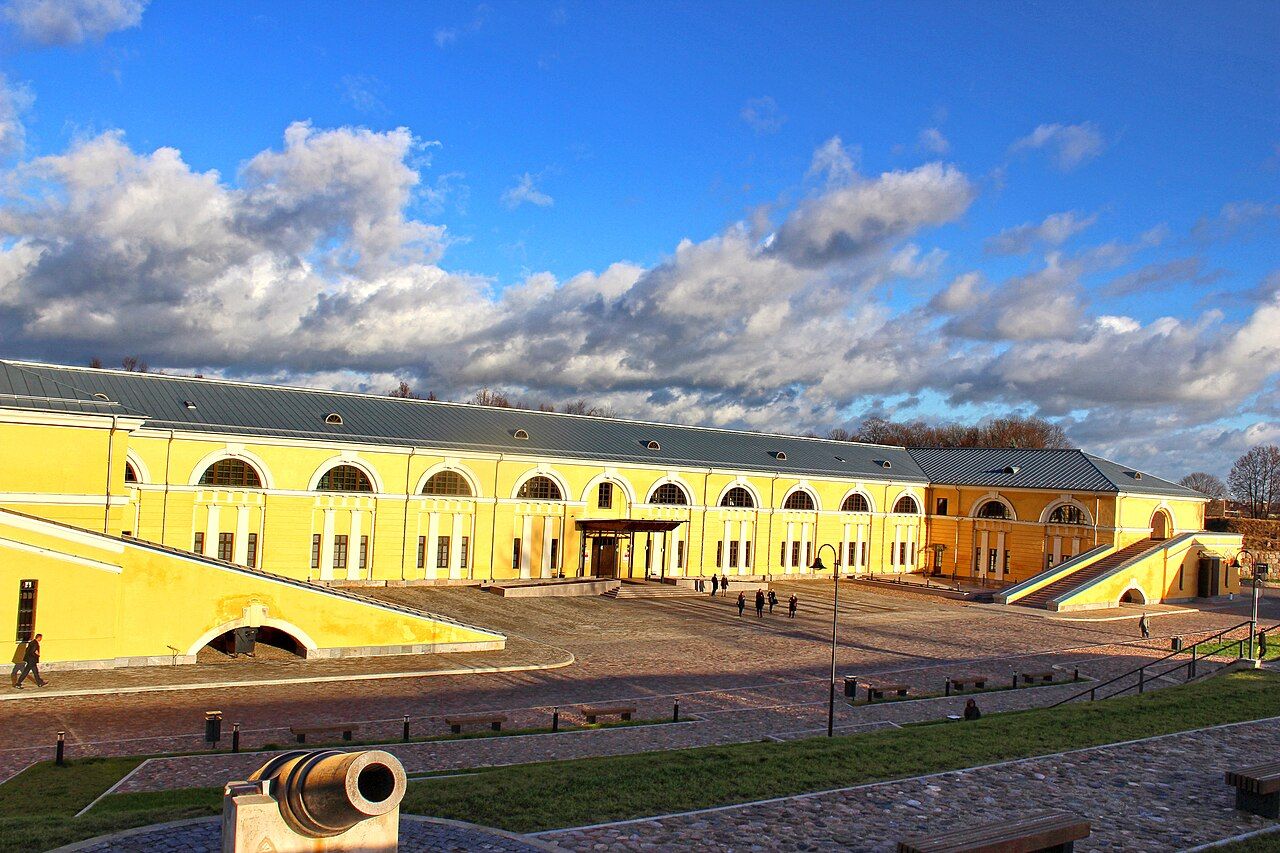
Rothko left Dvinsk as a child and never went back, and for decades after the war his birthplace had little to say about him. That changed after Latvian independence. The city marked his centenary with a programme of events in 2003, and in 2013 it opened an art centre devoted to him in the old artillery arsenal of the fortress, with original works lent by his children, Kate Rothko Prizel and Christopher Rothko. It’s now known as the Rothko Museum, and it’s the reason many visitors make the trip to Daugavpils at all.
Next in the series: a Rothko day in Daugavpils, with the latest on the museum’s display.


